
Moving a piano requires far more planning than moving an ordinary table, sofa or cabinet. Acoustic pianos combine substantial weight with delicate keys, strings, pedals, action components and finished surfaces. Poor lifting, sudden movement or unsuitable equipment can damage the instrument and the surrounding property.
Safe piano removals for homes start with a detailed assessment. Experienced movers check the piano type, dimensions, access route, stairs, flooring, parking and destination before anyone attempts to lift the instrument.
Bennett’s Removals & Storage can help homeowners plan piano moves around the specific property and instrument. Whether you need to move an upright piano between ground-floor rooms or transport a larger piano through challenging access, preparation plays a central role in reducing avoidable risks.
Steinway & Sons also advises owners to use professional piano movers with appropriate equipment when relocating an acoustic piano.
Why Safe Piano Removals for Homes Matter
A piano may look like a robust piece of furniture, but its construction makes it very different from an ordinary household item. Movers need to protect the instrument, the people handling it and both properties throughout the move.
A Piano Combines Weight With Delicate Components
An acoustic piano contains a complex keyboard mechanism, strings, hammers, pedals and structural components. Yamaha notes that piano strings operate under substantial tension, while the instrument’s frame supports considerable internal forces. Movers therefore need controlled handling rather than sudden tilting, dropping or unnecessary vibration during transport.

The Property Also Needs Protection
Heavy instruments can mark timber floors, damage laminate, catch against door frames or strike walls when teams work without enough space. Professional movers assess these risks before lifting. They can plan the carrying route and use suitable floor, corner or surface protection where the property’s layout requires additional care.
What Makes Moving a Piano Difficult?
Every piano move creates a different set of challenges. Instrument type, weight, shape and property layout can completely change how movers need to approach the job.
Piano Size and Weight Affect the Moving Plan
Upright, baby grand and grand pianos have different shapes and weight distributions. A large piano may require additional movers, specialist equipment or partial preparation before transport. Tell the removal company the piano make, model and approximate dimensions where possible so the team can plan resources accurately.
Narrow Doorways Can Restrict Movement
A doorway that comfortably accommodates normal furniture may still create problems for a piano. Movers need enough clearance to control the instrument without striking frames or walls. Measuring the piano, door openings and tight corridors before moving day helps the team identify potential problems and consider a safer route.
Stairs Increase the Complexity
Staircases introduce height changes, limited working space, turns and landings. Movers need to understand the staircase width, number of steps, corners and available clearance before attempting the move. A complicated stair move may require additional personnel or a different handling strategy from a simple ground-floor collection.
Flooring Requires Careful Consideration
Wood, laminate, tiles and other finished flooring can mark under concentrated weight or moving equipment. Experienced movers consider the floor type and select suitable protection where appropriate. They also plan how to position equipment without dragging the piano unnecessarily across surfaces or creating avoidable pressure in vulnerable areas.
Step 1: Identify the Piano Before Moving Day
Accurate information helps the removal company prepare the correct team and equipment.
Provide the Piano Type and Dimensions
Tell the movers whether you have an upright, baby grand or grand piano. Provide approximate height, width and depth when possible. Photographs can also help the team understand the instrument and surrounding space. Accurate information reduces the chance that movers arrive without suitable equipment or enough personnel.
Mention Any Existing Damage
Tell the removal company about loose components, damaged legs, unstable pedals, weakened casters or existing scratches before the move. Photographs can create a useful condition record. Highlighting structural concerns also helps movers decide whether the piano needs additional preparation before they attempt to lift or manoeuvre it.
Step 2: Inspect the Complete Moving Route
Professional piano moving requires planning from the instrument’s current position all the way to the vehicle.
Measure Doors, Hallways and Corners
Measure restricted doorways, hallways and tight turns where possible. Do not consider width alone; height and manoeuvring space also matter. A piano may technically fit through an opening but still lack enough space to rotate safely. Give these measurements and photographs to the movers before collection day.
Check Steps, Stairs and Landings
Tell movers about every step between the piano and the vehicle, including exterior steps. For stairs, provide photographs showing turns and landings. This information helps the team understand the route before arrival and determine whether the move needs additional people, equipment or further assessment.
Step 3: Prepare Your Property
Homeowners can make a piano move safer by creating a clear working area before the team arrives.
Remove Obstacles From the Route
Clear furniture, boxes, shoes, decorations and other obstacles from hallways and entrances. Open internal doors where helpful and secure anything that could restrict movement. Keep children and pets away from the working route. More space gives movers better control when handling a heavy and awkward instrument.
Confirm Vehicle Access and Parking
Tell the company where the removal vehicle can park and how far movers must carry the piano. Mention narrow roads, gates, steep driveways or parking restrictions. A short, clear route between the property and vehicle can significantly simplify handling compared with a long carry through restricted access.
Step 4: Protect the Piano Properly
Protection needs to match the piano rather than follow a standard furniture-wrapping routine.
Protect Finished Surfaces and Vulnerable Areas
Movers may use padded covers, blankets and other suitable protection around the piano cabinet. These materials help reduce surface scratches and minor knocks during carrying. The team should secure protection carefully without applying unnecessary pressure to vulnerable components or using methods that could damage polished finishes.
Secure Appropriate Moving Components
A professional team checks which parts require securing before movement. The exact preparation depends on the instrument. Grand pianos can require a substantially different process from uprights. Homeowners should avoid dismantling structural components themselves unless a qualified professional has specifically instructed them to do so.
Step 5: Use Suitable Piano-Moving Equipment
Household trolleys and improvised lifting methods do not automatically provide safe piano transport.
Specialist Equipment Improves Control
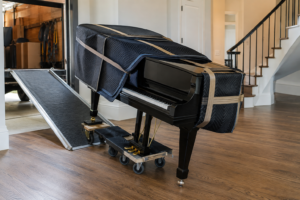
Depending on the instrument and property, professional movers may use piano moving boards, dollies, straps, protective covers and other handling equipment. The team should select equipment according to the piano, route and flooring rather than forcing one method onto every move. Proper equipment helps movers maintain control throughout difficult manoeuvres.
Team Coordination Matters as Much as Equipment
Equipment alone cannot guarantee a safe move. Movers need clear communication and coordinated movements, particularly around stairs, corners and thresholds. One team member may guide the movement while others control the instrument’s weight and direction. Careful coordination helps prevent sudden shifts that could affect the piano or surrounding property.

Step 6: Move the Piano With Controlled Handling
Professional movers should prioritise control over speed throughout the physical move.
Avoid Sudden Tilting and Uncontrolled Movement
Movers need to keep the instrument stable and use deliberate movements. Yamaha’s transport guidance for several piano-style instruments specifically warns against excessive shock or vibration, illustrating why careful handling matters when relocating instruments with sensitive components.
Take Extra Care Around Stairs
Stair moves require additional coordination because gravity changes how the team manages the instrument’s weight. Movers should never rush this stage. They need enough space, suitable equipment and appropriate staffing to control each movement while protecting the piano, staircase, walls and people involved.
Step 7: Secure the Piano Inside the Vehicle
Careful carrying means little if the piano moves freely once the vehicle starts travelling.
Position the Piano Strategically
Movers need to choose a stable position inside the removal vehicle that suits the instrument and the rest of the load. They should avoid placing household items where they can fall against the piano. Proper positioning helps reduce unnecessary movement during braking, turning and changes in road surface.
Secure the Instrument for Transport
Professional movers use suitable restraint methods to limit movement during the journey. They should keep protective coverings in place where necessary and prevent surrounding furniture or boxes from shifting against the piano. A carefully organised load provides more protection than simply finding enough empty vehicle space.
Step 8: Prepare the Destination Before Arrival
Safe piano removal continues until the team positions the instrument inside its new home.
Decide Where the Piano Will Go
Choose the final location before movers arrive where possible. Check whether the route from the entrance to that room provides enough clearance. Changing your mind after the team has already carried the piano inside can create unnecessary additional handling and increase the difficulty of the job.
Clear and Protect the New Route
Remove obstacles from the destination property just as you did at the collection address. Tell movers about new stairs, narrow doors or fragile flooring. The team should understand the complete delivery route before unloading so it can prepare rather than discovering unexpected obstacles while supporting the piano’s weight.
Should You Tune a Piano After Moving?
Many homeowners worry that moving will affect how their piano sounds.
Allow the Piano to Settle in Its New Environment
Changes in temperature and humidity can influence an acoustic piano’s tuning and stability. Steinway recommends asking an experienced technician to check and tune a piano after a move. Yamaha also recommends regular professional tuning because environmental and mechanical changes affect acoustic instruments over time.
Use a Qualified Piano Technician
A removal company handles transportation, while a piano technician focuses on tuning, regulation and mechanical condition. If the instrument sounds different after relocation or has travelled a significant distance, arrange an assessment with an experienced technician. This separates specialist musical maintenance from the physical moving process.
Tips for Safer Piano Removals
A few preparations can prevent major complications on moving day.
Give Movers Complete Information in Advance
Provide photographs, measurements, piano type, floor level, stairs and parking details when requesting a quotation. Mention unusual property features or known access difficulties. Accurate information helps the removal company decide how many movers it needs and what equipment the team should bring.
Never Attempt a Difficult Piano Move Alone
A piano’s weight and awkward shape can make a seemingly simple manoeuvre dangerous. Avoid improvising with unsuitable trolleys, ropes or household equipment. Professional movers can assess risks and coordinate the lifting process, especially when stairs, thresholds or narrow entrances add complexity.
How Much Does a Piano Removal Cost?
No single price applies to every household piano move because practical conditions can vary considerably.
Several Factors Affect the Quotation
The company may consider piano type, size, collection and destination, travel distance, stairs, access, parking, personnel and specialist equipment. A straightforward ground-floor upright move may require fewer resources than moving a grand piano through stairs or restricted city-centre access.
Request a Quote Based on the Actual Move
Give the company detailed information rather than asking for a generic piano-moving price. Send photographs where possible and describe access at both properties. A detailed quotation helps you understand what the service includes and reduces the chance of unexpected complications when the team arrives.
Why Choose Bennett’s Removals & Storage?
Piano moving requires careful preparation rather than a one-size-fits-all approach.
Plan the Move Around the Piano and Property
Bennett’s Removals & Storage can discuss the piano type, access, stairs, collection property and destination before moving day. Sharing accurate details allows the team to plan the physical move around the actual circumstances rather than treating the piano like standard household furniture.
Clear Communication Supports Safer Handling
Customers should understand how the team plans to approach difficult access and what preparation they need to complete beforehand. Discuss stairs, flooring, parking and fragile areas clearly. Good communication helps create realistic expectations and allows both the homeowner and removal team to prepare properly.
Frequently Asked Questions
1. Can a Removal Company Move a Piano Safely?
Yes, experienced movers can handle many household piano moves when they have suitable equipment, enough staff and accurate information about the property. Professional piano manufacturers also recommend using experienced piano movers. Tell the company about stairs, narrow doors, flooring and access before booking so the team can plan properly.
2. Can I Move a Piano Myself?
Moving a piano without appropriate experience can create substantial risks to the instrument, property and people handling it. Its concentrated weight and awkward shape make control difficult, especially around stairs. Professional movers can assess the route, select suitable equipment and coordinate the lifting process more safely than improvised household methods.
3. How Should I Prepare My Home for Piano Removal?
Clear furniture, boxes and other obstacles from the route. Keep children and pets away from the working area and tell movers about stairs, narrow entrances and fragile flooring. Provide parking information and photographs before moving day. Confirm the destination position as well so the team understands both ends of the move.
4. Can Movers Take a Piano Upstairs?
Sometimes, but the movers need to assess the staircase first. Width, turns, landings, headroom and available working space all affect feasibility. A difficult stair move may require extra personnel or specialist equipment. Provide photographs and measurements before booking rather than assuming the piano will fit simply because the staircase looks wide enough.
5. Does a Piano Need Tuning After Moving?
An acoustic piano can need tuning after relocation because transport and environmental changes may affect stability. Steinway recommends having an experienced technician check and tune the instrument after a move. Give the piano time to settle into its new environment, then consult a qualified piano technician about the appropriate timing.
Final Thoughts
Safe piano removals for homes depend on preparation, suitable equipment, experienced handling and clear communication.
Start by identifying the piano type and measuring difficult access points. Tell the removal company about stairs, restricted parking, narrow hallways and delicate flooring. Clear the route before moving day and decide exactly where the piano should go at the destination.
Professional movers can then plan how to protect, lift, manoeuvre, secure and transport the instrument without treating it like ordinary furniture.
Bennett’s Removals & Storage can support homeowners who need practical help with piano transportation as part of a carefully planned move. Discuss the piano and both properties in advance so the team can assess the requirements accurately.
After relocation, consider asking an experienced piano technician to inspect and tune your acoustic piano, particularly after a substantial move or environmental change.
With accurate information, professional handling and careful preparation at both properties, you can make a piano move far more controlled, organised and manageable.
 Email us: info@bennettsremovals.com
 Visit Bennett’s Removals & Storage
Social Media: Facebook, LinkedIn, Twitter, Instagram.
Experience the top services from Bennett’s Removals & Storage in your area: