
Moving to Spain? We make it simple! At Bennett’s Removals & Storage, we handle everything. From packing to transport, we ensure a smooth move. Our expert team takes care of your belongings with care.
Enjoy a hassle-free relocation to sunny Spain. Contact us today for a free quote!
| Time Zone: | CEST |
| Currency: | Euro (€) (EUR) |
| Calling Code: | 34 |
| Flight Time from UK: | 2 hours 30 mins + |
| Language: | Spanish |
| Population: | 46.57 million |
| School Year Starts: | September |
Spain offers sunny weather, a lower cost of living, and a relaxed lifestyle. Enjoy beautiful beaches, delicious food, and a friendly atmosphere. Healthcare and transport are affordable. Many British expats love the slower pace of life. Moving is easy with expert help. Bennett’s Removals & Storage makes your relocation smooth and stress-free.
Spain is a top choice for Brits looking for a fresh start in the sun. With warm weather, golden beaches, and stunning landscapes, it offers a relaxed way of life. The rich history, vibrant arts, and world-famous food make it even more appealing. With nearly a million British expats already there, you’ll never feel out of place.
Whether you picture yourself enjoying sangria in a peaceful Menorcan villa or savouring tapas after work in Madrid, Spain has something for everyone. Now that you’ve decided to move, it’s time to think about the details. This guide will help you understand customs, transporting your belongings, bringing your car, and finding the best areas for expats.
Spain offers a fantastic lifestyle, from relaxing siestas to sunny beaches and delicious cuisine. But there’s more to Spain than just holidays and retirement—it’s a diverse and vibrant place to call home.
At Bennetts Removals & Storage, we make moving simple. Our expert team safely transports your belongings from the UK to Spain, ensuring a smooth relocation. With years of experience and local expertise, we tailor each move to your needs. From packing to paperwork, we handle everything, so you can settle in stress-free. Get in touch today for a hassle-free move!
At Bennett’s Removals & Storage, we offer a truly personalised moving experience. We understand that relocating to Spain can be both exciting and daunting, so we’re here to make it as smooth as possible. Instead of just being a voice on the phone, we’ll arrange a face-to-face meeting at your home. This gives you the chance to discuss all the details and ask any questions.
During the visit, we’ll assess the size of your move and take note of any special requests. Our expert team will also conduct an international moving survey, helping you decide what to send to Spain, what to store, and what to dispose of.
We’ll discuss your budget, moving dates, and timeline, which will help us design a tailored moving plan for you. While these details can be flexible, they’ll guide us in crafting the best plan for your needs. Once we’ve finalised everything, we’ll send you the proposed plan for your approval.
Bennett’s Removals & Storage has been assisting with moves for over 40 years, and there’s no challenge we haven’t encountered. From safe pet transportation to overseas vehicle relocation, removals insurance, and expert packing services, we’re here to support you every step of the way.
Wherever you’re relocating from, we can manage the necessary paperwork and visas, reducing the stress for you. We aim to handle all the paperwork, so you don’t have to worry about it.
Get in touch today to discover how we can tailor our services to your move. Request a quote or reach us at 01143520552 or email info@bennettsremovals.com.


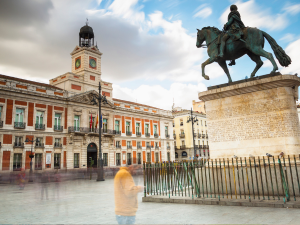
The fastest and most convenient way to get from the UK to Spain is by air. Spain boasts several international airports, with Madrid Barajas being the largest, followed by Barcelona El Prat. Airlines like British Airways, EasyJet, RyanAir, and Iberia operate flights between the UK and Spain, which typically take around 2.5 hours. For those who prefer to avoid flying, driving is another option, taking roughly three days with overnight stops and regular breaks. Alternatively, you can travel by train, using France’s high-speed rail services.
Once you’ve decided to make the move to Spain, the next step is to choose which items you’ll be taking with you. There are two main options for shipping your belongings: air freight and sea freight. Sea freight is often the more affordable choice. If you’re moving fewer items, groupage shipping allows you to share space in a container, lowering the cost.
No matter the size of your items, we can transport them. However, if you’re only moving temporarily, you may prefer to store some items securely with Bennetts Removals & Storage until you’re ready to bring them back.
When travelling from the UK to Spain, a passport is essential. Since the UK is not part of the Schengen Area, which includes 26 European countries with open borders, you will need to go through passport control.
If you’re arriving from outside the Schengen Area, you’ll require both a visa and a passport to enter Spain. Additional documents may be necessary, and the team at Bennetts will be happy to assist you with all the details.
Spain boasts vibrant cities like Valencia, Barcelona, and Madrid, alongside its beautiful islands such as Ibiza, Majorca, Minorca, and the Canary Islands, located off North Africa’s coast.
While Spain’s culture may bring to mind sunny beaches and rich cuisine, it’s much more varied than the common stereotypes. Many moving to Spain embrace its warmth, flavourful dishes, and relaxed lifestyle.
If you’re moving for work, your destination might already be decided. However, for those planning a move independently, take time to explore. Visit different areas, make a list of priorities, and consider all options before settling on a city or region.
Spain’s weather differs across regions. Most areas, like Barcelona, Seville, Alicante, Granada, and Valencia, experience a Mediterranean climate, with hot, dry summers and mild, wet winters. Madrid, however, has a continental climate, with scorching summers and chilly winters. In summer, temperatures can reach an average high of 31°C, while winter lows can drop to around 4°C.
Barcelona
| Jan | Feb | March | April | May | June | July | Aug | Sep | Oct | Nov | Dec | |
| Temp °C | 10 | 10 | 12 | 13 | 16 | 20 | 23 | 24 | 22 | 18 | 13 | 11 |
| Rainfall (mm) | 3 | 5 | 4 | 5 | 5 | 2 | 2 | 5 | 5 | 6 | 4 | 5 |
Malaga
| Jan | Feb | March | April | May | June | July | Aug | Sep | Oct | Nov | Dec | |
| Temp °C | 13 | 13 | 15 | 16 | 19 | 22 | 25 | 25 | 24 | 20 | 16 | 13 |
| Rainfall (mm) | 6 | 5 | 4 | 5 | 3 | 1 | 0 | 1 | 2 | 4 | 6 | 7 |
La Coruna
| Jan | Feb | March | April | May | June | July | Aug | Sep | Oct | Nov | Dec | |
| Temp °C | 11 | 11 | 12 | 13 | 14 | 17 | 19 | 20 | 19 | 16 | 14 | 12 |
| Rainfall (mm) | 17 | 13 | 14 | 16 | 13 | 9 | 8 | 8 | 10 | 16 | 18 | 17 |
Many of the top-paying roles for expats in Spain are in executive or management positions. These jobs are often filled by individuals who are transferred by their employers. Highly respected and well-paid roles can also be found in aviation, government, counselling, and marketing.
English speakers often take on teaching jobs in Spain. There are also numerous opportunities for expats in the tourism, hospitality, and caregiving sectors.
Securing a job abroad can be challenging, but it’s worth exploring all options. If your current employer has an international presence, inquire about transferring to the Spanish branch. For non-international companies, research their Spanish counterparts and send a brief introduction. Another option is to target your dream companies and monitor their job listings on websites like LinkedIn. For work in tourism or hospitality, consider visiting Spain for a few days before relocating to personally drop off your CV at various businesses like bars, restaurants, and hotels.
Spain offers a more affordable lifestyle compared to the UK. Everyday expenses, including food and transport, cost less. However, wages are lower too. The average salary in Spain is €1,742 (£1,464) per month, while in the UK, it’s £2,886. Rent in Spain is around 27% cheaper. Overall, living costs, including rent, are about 25% lower than in the UK.
Spain is among the ten EU nations that use the Euro as their currency. As of July 2024, the exchange rate stands at 1 Euro to 0.84 British pounds.
Spain offers a wide range of banking options for expats, with HSBC and Barclays being among the most well-known choices. Some expats prefer to keep their existing accounts, while others opt for a local bank. Almost all banks in Spain provide online banking services, making it convenient to manage finances. For those who do not speak Spanish or English, certain banks have multilingual staff and can translate important documents into the required language.
Expats have the option of opening either a resident or non-resident bank account, depending on their circumstances.
It is important to be aware of the various charges that Spanish banks may impose. These can include fees for debit card transactions, bank transfers, and even account correspondence. Additionally, most banks require a small fee when opening a new account.
Take a look at some everyday essentials you might buy frequently while living in Spain. The prices listed below come from Numbeo and are displayed in both Euros and GBP, allowing you to compare costs easily.
| Item | Price in Spain | Price in UK |
| Milk (1l) | €1.04 £0.88 | €1.4 £1.24 |
| Loaf of white bread | €1.30 £1.09 | €1.45 £1.22 |
| Eggs (12) | €2.49 £2.09 | €3.47 £2.92 |
| Bananas (1kg) | €1.71 £1.43 | €1.37 £1.15 |
| Chicken breasts (1kg) | €7.15 £6.02 | €7.80 £6.56 |
| Bottle of water (1.5l) | €0.67 £0.57 | €1.28 £1.07 |
| Pair of quality jeans | €75.71 £63.66 | €75.42 £63.41 |
| Chain store dress | €30.78 £25.88 | €37.74 £31.73 |
| Mid-range trainers | €77.77 £65.39 | €88.74 £74.62 |
| Cinema ticket | €8.00 £6.73 | €11.89 £10.00 |
| Fitness Club Fees (1 month) | €39.36 £33.10 | €38.83 £32.65 |
Renting a home in Spain varies in cost depending on the location and size of the property. A one-bedroom apartment in the heart of a city typically costs around €972.88 (£818.05) per month, while a three-bedroom house in the suburbs can be rented for approximately €1,087.23 (£914.20) per month.
For those considering buying a property, it’s important to factor in the time and expenses involved. Spain has a complex and bureaucratic process for property purchases, which can be both costly and lengthy. If you’re uncertain about your long-term plans, renting might be a smarter financial choice until you discover the perfect home.
Spain boasts an exceptional healthcare system, widely respected across Europe and beyond. Both public and private medical services are known for delivering excellent care.
Residents with a social security number can access free healthcare. Expats must register with the local town hall to obtain their social security number and card. Once issued, this can be presented at a medical centre to receive a health card, granting access to free treatment.
Free healthcare is also available for those with an EHIC or GHIC card, as well as children, pregnant women, and pensioners.
Public hospitals in Spain often have bilingual staff or interpreters to assist non-Spanish speakers. While specialist appointments and surgeries may involve long waits, emergency care services tend to be much faster than in the UK.
Many expats choose private healthcare for shorter waiting times and broader access to specialists and treatments.
For minor health concerns, 24-hour pharmacies are a popular option. Recognisable by their glowing green cross, these pharmacies are found throughout Spain. Strict regulations keep medicine prices affordable, and most treatments can be purchased over the counter.
In Spain, children between the ages of six and 16 are required by law to attend school. Expat families have several schooling options to consider, including Spanish public schools, bilingual institutions, private schools, independent schools, and home schooling. Regardless of the choice made, students can continue their education by attending upper secondary school (equivalent to college) and university once they reach 16.
For families with younger children or those of primary school age, a local public school might be the ideal choice. In these schools, children are immersed in a fully Spanish-speaking environment, which aids in learning the language quickly while promoting integration into Spanish society. However, it’s important to note that all lessons will be taught exclusively in Spanish.
Alternatively, bilingual schools offer a blend of English and Spanish education, providing children with the chance to adjust while still communicating in English. These schools often include daily lessons in Spanish, helping children gradually integrate and learn the language. Look for schools that offer British-Spanish programs for a balanced experience.
Although public schools have their advantages, the idea of attending a school where the language and culture are unfamiliar can be overwhelming for children. In Spain, some public schools offer bilingual programs, which allow children to communicate in English while gradually incorporating Spanish into their learning. These bilingual institutions offer a smoother transition, allowing students to feel more comfortable and confident in their new environment.
Private schools are another option, often offering smaller class sizes, superior facilities, and a wider range of extracurricular activities. Unless the private school is bilingual, the curriculum will closely resemble that of semi-private schools, and lessons will be conducted in Spanish.
For those interested in studying for the International Baccalaureate (IB), this internationally recognised qualification is available to children of all ages and is accepted by universities around the world. The IB is an ideal choice for families who need an alternative to their home country’s curriculum. This type of education is typically found in international schools, which can be quite expensive. However, many international schools offer specific national programs, such as British, German, or French curricula, allowing students to receive an education more aligned with their home country.
Living in Spain offers a more laid-back lifestyle compared to many other European nations. The country is largely Roman Catholic, with approximately 94% of the population identifying with the faith. Despite this, Spain’s rich and varied history has led to a society where people of different religions—such as Muslims, Jews, and Christians—live peacefully alongside each other.
Family plays a central role in Spanish life, with much of the nation’s social structure revolving around family gatherings. It’s common for families to provide both financial and emotional support to one another.
While Spain once had a traditional, patriarchal society where women primarily stayed at home, things have evolved significantly. Today, women are attending universities and pursuing careers in fields that were historically male-dominated. Gender equality is now a major focus, and both men and women share responsibilities when it comes to parenting and running a household.
Spanish, also referred to as Castilian, is the primary language spoken in Spain, with over 45 million people using it across the country.
In addition to Spanish, Spain is home to several regional languages. These include Catalan, Galician, Valencian, Basque, and Balearic, each spoken in specific areas of the country.
When you visit or live in Spain, trying the country’s iconic dish, paella, is a must. While many believe that this classic originated in Valencia, where it was traditionally made with rice, rabbit, chicken, and vegetables, the modern version has evolved. Today, it typically features a combination of seafood such as calamari, mussels, clams, prawns, scampi, and various types of fish.
Spain’s cuisine is rich and diverse, with other popular dishes including gazpacho, patatas bravas, empanadas, and albondigas (meatballs).
Spanish desserts often centre around dairy, and flan and Crème Catalana are particularly well-loved. However, in recent years, churros have become a beloved treat. Originally from Spain, these deep-fried doughnut sticks are enjoyed at any time of day, often dipped into a warm cup of rich chocolate.
As for drinks, sangria holds a special place in Spanish culture. A typical preparation involves a bottle of red wine, two oranges, a lemon, sugar, and a cinnamon stick, all mixed and left to sit for a couple of hours, creating a refreshing and flavourful beverage.
There are 9 national public holidays per year in Spain, which are listed below. Each region in the country also has its own set of holidays too, which can see local businesses closed.
Considering a move to Spain? If you’d like more information about our removal services for Spain or need a personalised quote, feel free to reach out to us. You can contact us by calling 01143520552 or sending an email to info@bennettsremovals.com Our team is ready and eager to assist you with your international move and ensure a smooth relocation experience.